
Loading…
Loading…
← GuidesFull curriculum section
Professional land-list research: legal lot status, access, environmental screening, utilities, and development practicality.
Educational reference only. Not legal, tax, or investment advice.
In software like Plot Eval, choosing a property typically recenters the map on the parcel, draws the boundary, and shows a resolved address line so you can orient field and record research. The mockups below use a generic address and shapes only—they are not real parcels or official maps.

For raw land, the first question is whether the lot can legally be used the way you intend—not only what it might sell for. Use official zoning determinations or compliance letters where available; use formal lot-validation if legality is unclear.
Research recorded easements, rights-of-way, deed restrictions, and whether access is both legal and practical. Older instruments can bury constraints that are easy to miss on a map alone.
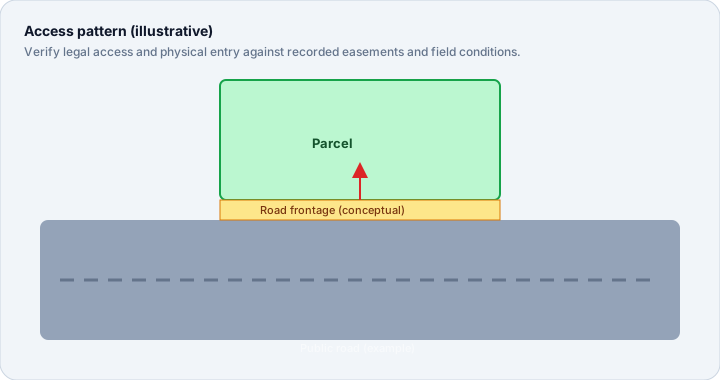
Overlay flood and wetlands mapping, topography, and a practical environmental red-flag pass. Raw land issues are often invisible until you combine the right layers.
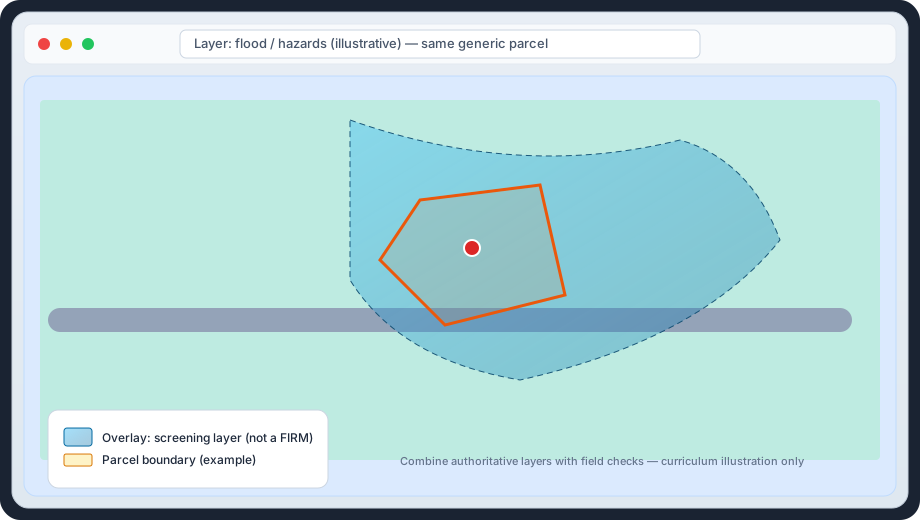
Check water, sewer or septic, power, road frontage, and whether the jurisdiction will issue permits under current conditions. Cheap acreage without serviceable utilities often becomes long-duration inventory.
Common questions
County examples
County support controls how much parcel, map, and GIS context Plot Eval can show. These example county pages are useful starting points when you want to understand what data may be available.
Example county page for land-list research where parcel boundaries, access, and overlays matter.
County coverage example for reviewing land leads with map and GIS context.
Plot Eval helps you normalize lists, resolve parcels, enrich with county GIS where supported, score site and investment signals where data allows, and run a structured research checklist per property—alongside notes, status, reminders, and team workflow.